Identify Your Best Source of Data
Step 1: Identify the best source of consumption data accessible to you.
Step 2: Note your best source of data in your Project Plan, and click the save (check) button

Option 1: Utility Meters
Locate the utility meters that are measuring your home’s use of water, electricity and natural gas.

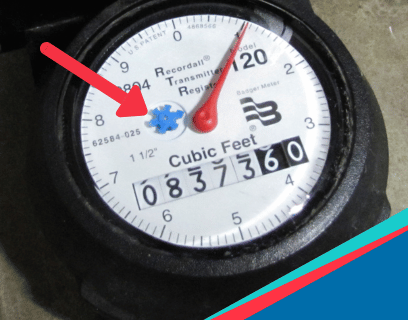
In colder climates, water meters are usually located in the basement, on the floor next to the wall that is closest to the street.
In warmer climates, water meters are usually located next to the street, directly in front of the home, inside a marked box.

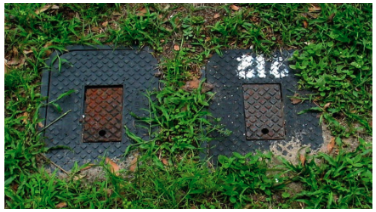
Important:
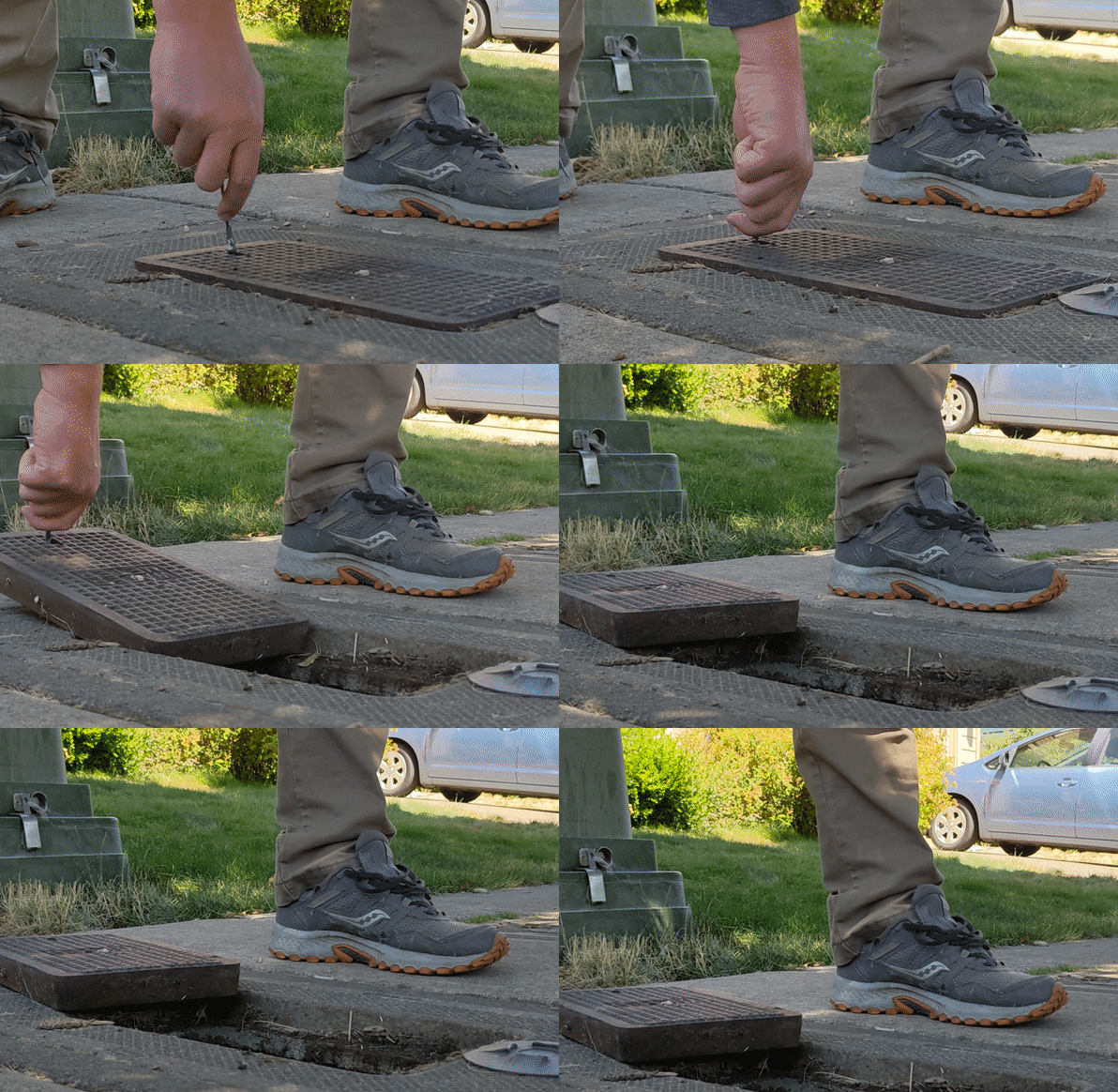
When accessing an outdoor meter box, students should exercise caution because the lids can be heavy: slide-off the lid, rather than lift it up. Check for critters, and take a photo of their meter with its numbers visible. Get help from an adult.

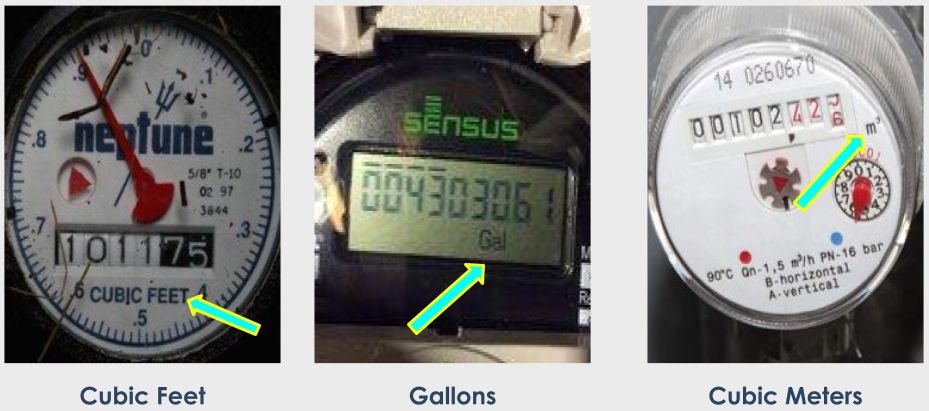
Take a photo of the face of your meter meter and take note of its units
Note: Not all students will have access to a water meter or water Utility portal
Students whose homes use well water might not have a water meter.
Students who live in an apartment building or duplex might not have access to the water meter.
Scroll down to the bottom of this page to find options for these students, including:
Collect data from the electricity or natural gas meters that monitor their home
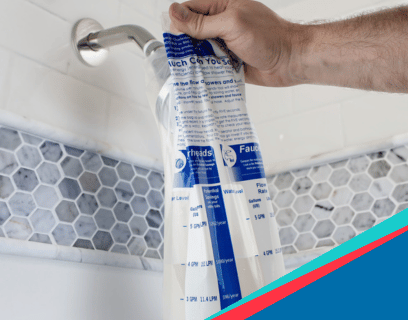
Measure specific uses of water, like showers or sprinklers, anywhere: at home, the school, your apartment, your place of work, or in your neighborhood common areas.

Electricity meters are often found on an outside wall. You might be able to find them by following where a power line comes down to your home.


Take a photo of your meter’s display face. Your meter might have an analog or digital display face.


Note: Meters with digital display faces sometimes flash multiple screens.
If it does, take a photo of the screen with the largest number on it.
As an analogy to your car, we want to take a photo of the total mileage displayed on the car’s odometer, not the smaller amounts of mileage that might be displayed on “Trip A” or “Trip B”.


Gas meters are often located on an outside wall. When gas is being used inside, you can often hear it flowing through the meter.
In multifamily housing gas meters might be located together with labels for which unit they supply.
Take a photo of your meter’s display face.


Option 2: Online Utility Portal
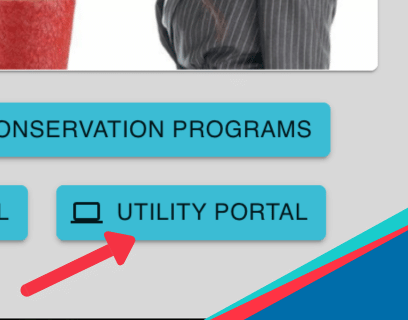
If your local utility sponsor has a utility portal available for students to use it will be linked on page first shown when you log into MeterHero.
Click on the button and sign in or create an account with your family.

Option 3: Gather data by Measuring (auditing) specific uses or Devices
Select this option, if you can’t access a meter or a utility portal. In that case, students can audit, or measure, specific uses of water, like showers or sprinklers, anywhere: at home, the school, your apartment, your place of work, or in your neighborhood common areas.
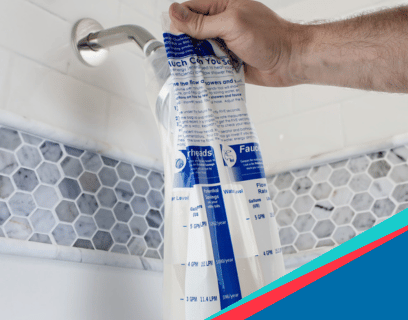
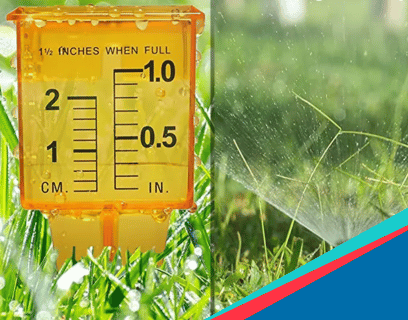
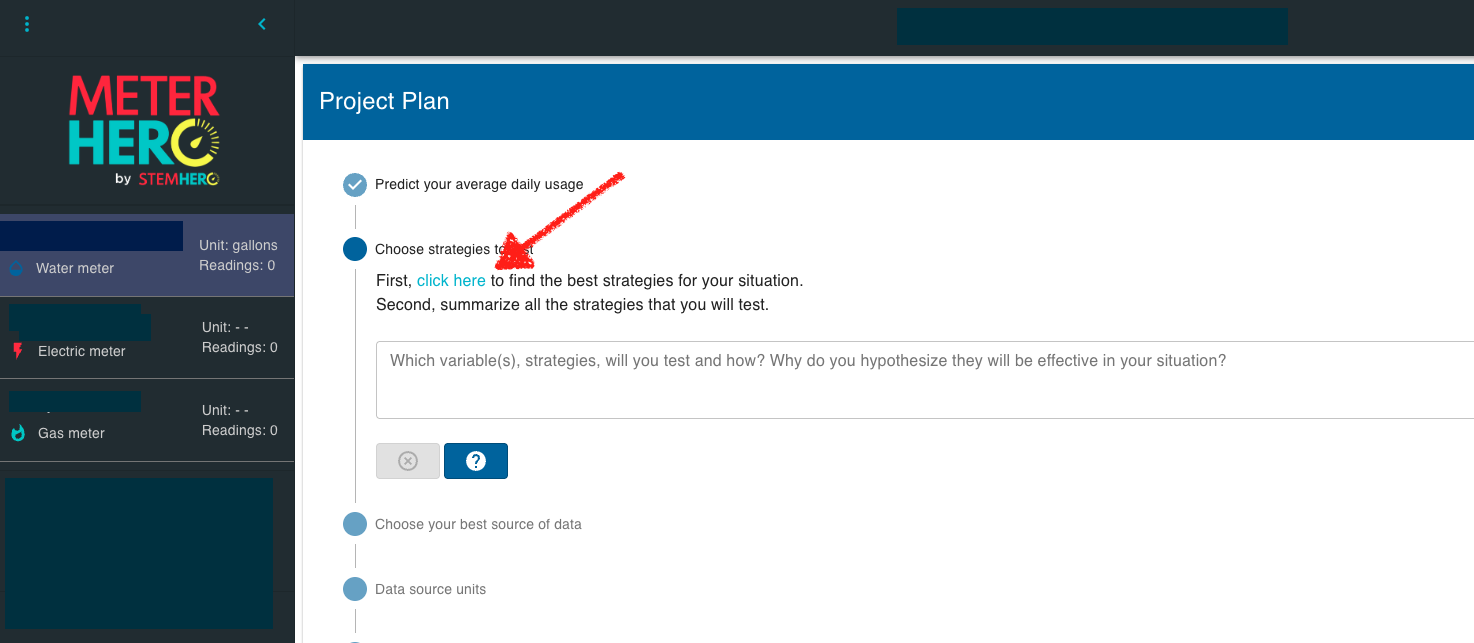
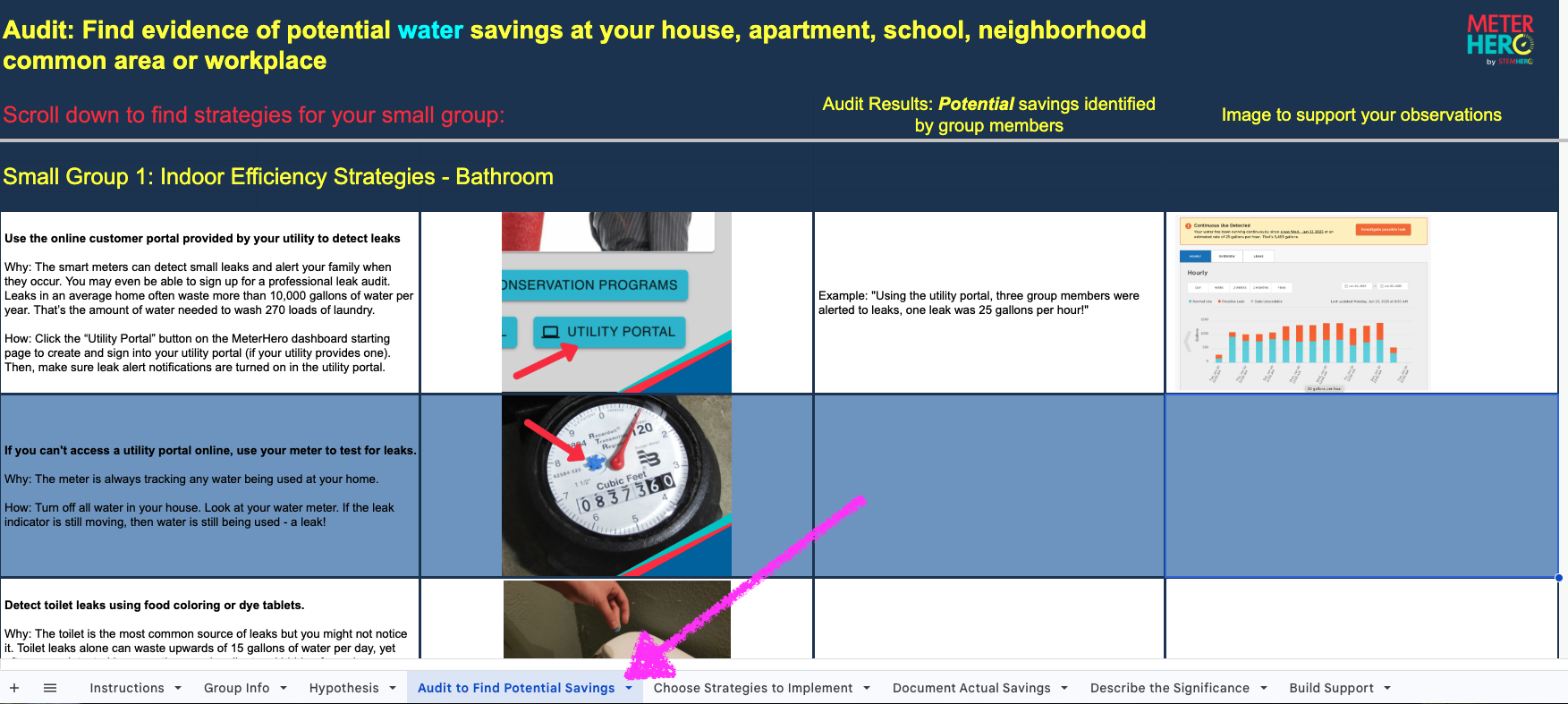
For complete instructions on how to measure more specific uses or devices, go to your MeterHero Project Plan, open the strategies Playbook, and go to the Audit tab:
Additional Optional Support Resources: